
Proper proxy setup is crucial when using an antidetect browser to enhance anonymity and avoid detection. Following a practical checklist, users should select the appropriate type of proxy, configure their profiles, verify IP addresses, and continuously monitor performance.
There are four common types of proxies: ISP proxies, which offer high stability, low latency, and reliable connections; residential proxies, which utilize real IP addresses from actual user devices to provide maximum credibility; SOCKS5 proxies, which are flexible, secure, and suitable for a wide range of purposes; and HTTP proxies, which are fast, easy to use, and ideal for general web traffic.
During setup, users should create distinct profiles, check the status of their digital fingerprints (including Canvas, WebGL, WebRTC, Fonts, Timezone, and Language), and ensure that their IP addresses are verified. Ongoing performance monitoring helps identify issues early and maintains a stable connection. Key benefits include more precise targeting, strengthened anonymity, improved performance, and smarter monitoring.
In summary, combining the right type of proxy with rigorous profile configuration enables users to operate antidetect browsers effectively, reducing the risk of being blocked or detected while performing online tasks.
https://hideproxy.io/blog/user-guide/proxy-setup-for-antidetect-browsers-a-practical-checklist
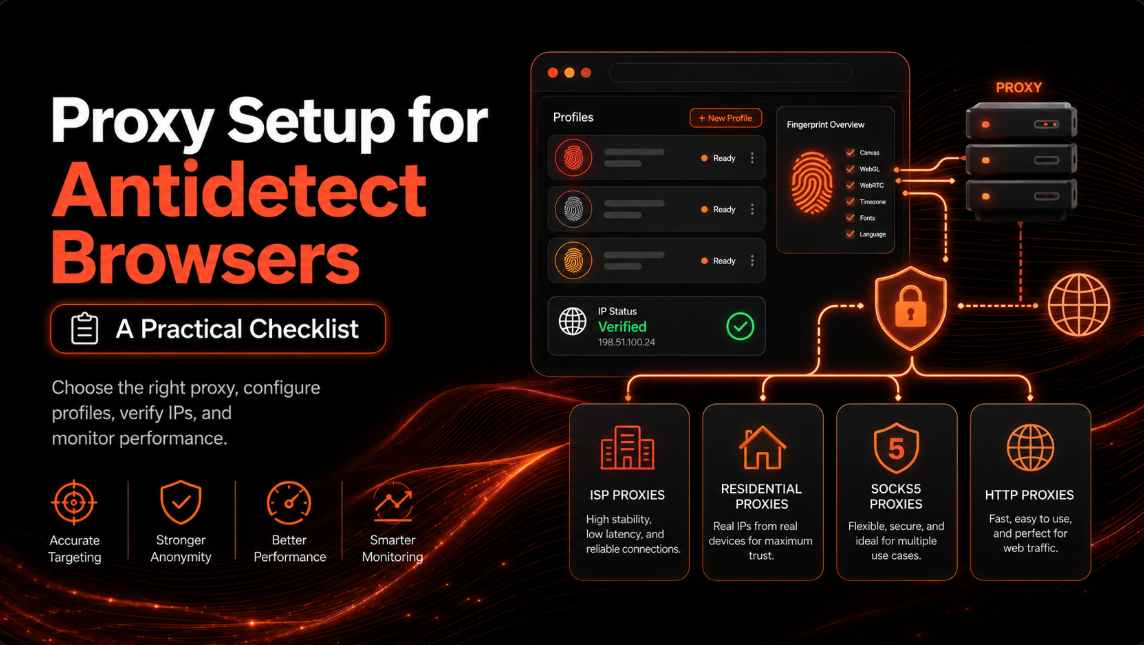
Guide to Setting Up Proxies for Antidetect Browsers – A Practical Checklist
GreenBarbara24/11/20261 lượt xem
Bình luận
Đang tải...
Đang kiểm tra đăng nhập...